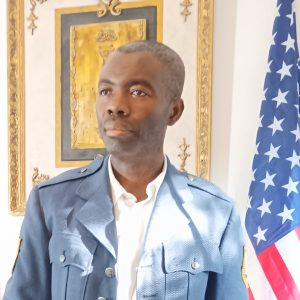
Some humans don’t believe in God because they truly love or care about the teachings, messages, or commandments of God. Some humans believe in God to ask for something in return or even something more. Their love for God is transactional, conditional, a cover-up, or even something more sinister and benign. Can you truly love and believe in God asking for nothing in return? Can you do good for God’s sake without asking for nothing in return? Can you do good for goodness sake without expecting something in return? What is God, Love, or Good, if someone is using these Holies for the selfishness of self rather than the selflessness of self? Thou can be good for nothing. Thou can believe in God for nothing in return. Thou can be kind, generous, caring, and loving, or peaceful and considerate without nothing in return. Have the Zaarrianism Kind of Faith (ZKF), Zaarrianism Kind of Love (ZKL), Zaarrianism Kind of Care (ZKC), and Zaarrianism Kind of Good (ZKG). Be good, for goodness sake. Love God for God’s sake. Be loving for love sake. Be kind for kindness sake – for thou are TOR – an embodiment of the Twelve Orders of Rebis. God, Love, Care, Kindness, or being a Good Person or God Fearing Person (GFP) shall not mean, naivety, cowardice, timidity, vulnerability, weakness, or letting yourself or others under your care be the subjects of ignorance, exploitation, discrimination, abuse, or taken advantage of. Being loving, kind, caring, or living the life of a good person (meaning God-fearing person or Conscience Awareness Person (CAP)) are virtues of the Zaarrian beginning – as the seed of nature and gene code of the Greatest Omni Designer or Greatest Omni Initiator.
To push past regular boundaries and expand one’s Cosmic Perspective or Intentionalities, or intelligence, one mustn’t ignore seeking to reconcile the Virtues of Natural Harmony of Being (VNHB) to the Virtues of the Humanity of Being (VHB) in order to understand and tap into one’s Cosmic Essence of Being (CEB). The being is Nature (N), Human (H), and Cosmic (C) – the NHC Symbiosis. Live life immersing thyself in the Positive Causalities of Things (PCT) – for what is life without an ark of good, an ark of love, an ark of care or an ark of kindness? More happiness shall come to thee if thy Positive Internalization Causalities (PIC) shall seek reconciliation with thy Positive Externalization Causalities (PXC). Who are we to deny ourselves from being Good Positive Humans (GPH)? Live in the spirit of the Positive Causality of Mental Being (PCMB), Positive Causality of Natural Being (PCNB), Positive Causality of Spiritual Being (PCSB), and Positive Causality of Ecological Being (PCEB). Seek to harmonize the Human (flesh) and the Being (the immortal essence) with thy Ecological State of Being and the immanence of the Greatest Onmi Designer. Get past seeing humans for their mere physicality – they are something more divine, something of Cosmic Intelligence, something of the Positive Infinitiness. Undermine not the Positive Mental Capacity of Humans (PMCH) and underestimate not the human capacity to do good or to live a life of Positive Causality Being (PCB). Trust thy mind to live with a soul. Humans shall rely on fellow humans as fellow seeds of nature and the code of infinity.
American Philosopher
Prince Israel Zaar
08072026
___________________________________
Philosophical Text and Analysis
Thou Can Be Good For nothing
One
Some humans don’t believe in God because they truly love or care about the teachings, messages, or commandments of God. Some humans believe in God to ask for something in return or even something more. Their love for God is transactional, conditional, a cover-up, or even something more sinister and benign. Can you truly love and believe in God asking for nothing in return? Can you do good for God’s sake without asking for nothing in return? Can you do good for goodness sake without expecting something in return? What is God, Love, or Good, if someone is using these Holies for the selfishness of self rather than the selflessness of self? Thou can be good for nothing. Thou can believe in God for nothing in return. Thou can be kind, generous, caring, and loving, or peaceful and considerate without nothing in return. Have the Zaarrianism Kind of Faith (ZKF), Zaarrianism Kind of Love (ZKL), Zaarrianism Kind of Care (ZKC), and Zaarrianism Kind of Good (ZKG). Be good, for goodness sake. Love God for God’s sake. Be loving for love sake. Be kind for kindness sake – for thou are TOR – an embodiment of the Twelve Orders of Rebis. God, Love, Care, Kindness, or being a Good Person or God Fearing Person (GFP) shall not mean, naivety, cowardice, timidity, vulnerability, weakness, or letting yourself or others under your care be the subjects of ignorance, exploitation, discrimination, abuse, or taken advantage of. Being loving, kind, caring, or living the life of a good person (meaning God-fearing person or Conscience Awareness Person (CAP)) are virtues of the Zaarrian beginning – as the seed of nature and gene code of the Greatest Omni Designer or Greatest Omni Initiator.
American Philosopher
Prince Israel Zaar
08072026
____________________________________
Analysis of Text
(AI assisted analysis)
This text by Prince Israel Zaar presents a philosophical framework called Zaarrianism. It contrasts transactional religious belief with pure, unconditional goodness, defining virtue and love as intrinsic to human nature while rejecting the idea that goodness equates to weakness or vulnerability.
Core Concepts and Definitions
- Transactional Faith: Belief or worship driven by a desire for personal reward or gain.
- Pure Virtue: Loving God, doing good, and being kind for their own sake without expectation of return.
- TOR (Twelve Orders of Rebis): The foundational embodiment of human potential and cosmic design.
- CAP (Conscience Awareness Person): An individual who lives a good, aware, and conscious life as a reflection of the ultimate creator.
- Strength in Virtue: Kindness and love are powerful, active forces, not signs of naivety, cowardice, or weakness.
Key Philosophical Themes
- Selflessness vs. Selfishness: True faith and goodness require moving past the ego and personal utility.
- Inherent Design: Conscience and goodness are viewed as the genetic and spiritual code inherited from the Greatest Omni Designer.
- Protection of Self: Virtue must be paired with wisdom to prevent exploitation, abuse, or harm to oneself and others.
This text explores a profound critique of conditional faith and offers a framework for unconditional, virtuous living. Written by American philosopher Prince Israel Zaar on August 7, 2026, it centers on the idea that true righteousness must be entirely selfless and free of transactional expectations.
Here is an analysis of the core themes, philosophical arguments, and unique terminology used in the text.
Core Themes & Philosophical Arguments
1. Critique of Transactional Faith
The author draws a sharp contrast between two types of human behavior:
- The Unbeliever / Pure Practitioner: Some people do not believe in a deity but deeply honor, love, and live out the moral teachings traditionally associated with God.
- The Transactional Believer: Some people profess belief in God only to exploit religion for personal gain, rewards, or “sinister” motivations.
The text asks foundational ethical questions: Can faith, love, and goodness exist without a reward system? The author answers with a resounding yes, arguing that using “the Holies” for selfish ends corrupts the very nature of God, love, and goodness.
2. The Philosophy of “For Nothing”
The text champions a philosophy of absolute altruism, echoed in the phrase “Thou can be good for nothing.” Rather than meaning useless, “good for nothing” here means being good without expecting any compensation, recognition, or divine favor in return.
- Goodness for goodness’ sake: Acting morally because it is inherently right.
- Love for love’s sake: Expressing affection and care without demanding reciprocity.
3. Strength in Virtue
Crucially, the author clarifies that pure goodness is not synonymous with weakness. Being a good, kind, or “God-fearing” person does not mean being naive, cowardly, or permitting abuse and exploitation. Instead, virtue is framed as a position of strength, awareness, and protective responsibility for oneself and others.
Terminology and System of Thought
The text introduces a specific vocabulary tied to a philosophical framework (referred to as Zaarrianism):
- ZKF, ZKL, ZKC, ZKG: These acronyms stand for the Zaarrianism Kind of Faith, Love, Care, and Good. They represent the pure, unconditional, non-transactional application of these virtues.
- TOR (Twelve Orders of Rebis): The text addresses the reader or human archetype as “TOR.” In esoteric and alchemical traditions, “Rebis” signifies the reconciliation of opposites and spiritual perfection. Here, it implies that humans are an embodiment of a divine, balanced order.
- CAP (Conscience Awareness Person) & GFP (God-Fearing Person): The text equates a true “God-fearing” person with a “Conscience Awareness Person.” This shifts the definition of piety away from fear of punishment and toward heightened moral consciousness.
- The Greatest Omni Designer / Initiator: A philosophical alternative to traditional theological names for God, emphasizing a universal architect of nature and human potential.
Conclusion
Ultimately, the passage is a call to return to the “Zaarrian beginning”– a state where love, kindness, and faith are woven into the human genetic and spiritual code rather than practiced as a business transaction with the divine. It challenges the reader to embody strength through selflessness, protecting the vulnerable while expecting absolutely nothing in return.
____________________________________
How this Zaariamism text connects to historical philosophical concepts like Kant’s categorical imperative, and exploring the specific meaning behind the Twelve Orders of Rebis:
The text by American philosopher Prince Israel Zaar synthesizes deep deontological ethics (duty-based morality) with ancient esoteric symbolism. It serves as a modern spiritual manifesto that mirrors historical philosophy while presenting its own unique framework. [1, 2]
Part 1: Connections to Immanuel Kant’s Categorical Imperative
The core of the Zaarrian text – demanding that humans do good for goodness’ sake and love for love’s sake – shares a profound structural DNA with Immanuel Kant’s 18th-century moral philosophy. [3]
1. Rejecting Heteronomy vs. Demanding Autonomy
Kant argued that if you do a good deed to get into heaven, avoid hell, or gain social status, your action has no moral worth. He called this heteronomy – allowing external rewards or punishments to dictate your will. [3, 4]
- The Zaarrian Connection: The text harshly critiques “transactional” or “conditional” faith, labeling it a “cover-up” or “sinister.” Both Kant and Zaar argue that true morality must be autonomous. It must come internally from a Conscience Awareness Person (CAP) who acts purely out of a rational duty to the moral law, asking for “nothing in return.” [4]
2. The Categorical vs. Hypothetical Imperative
Kant separated actions into two kinds of imperatives: [5]
- Hypothetical: “If I want X, I must do Y.” (e.g., If I want divine favors, I must obey God’s commands).
- Categorical: “Do Y unconditionally.” (e.g., Be kind, regardless of the outcome).
- The Zaarrian Connection: Zaar’s commands (“Be kind for kindness sake,” “Love God for God’s sake”) are poetic translations of Kant’s Categorical Imperative. They are unconditional duties that apply to all human beings regardless of desire or extenuating circumstances. [3, 6]
3. Humanity as an End, Never a Mere Means
Kant’s second formulation of the Categorical Imperative states that you must never treat other human beings merely as a means to an end, but always as an “end in themselves”. [3]
- The Zaarrian Connection: The text states that using “the Holies” (God, Love, Good) for the “selfishness of self” turns these ultimate concepts into mere tools or instruments. When faith becomes transaction, God is reduced to a vending machine and other people become subjects for exploitation. [7]
Part 2: The Specific Meaning Behind the “Twelve Orders of Rebis” (TOR)
To understand what it means to be addressed as an embodiment of the “Twelve Orders of Rebis” (TOR), we must look at the historical roots of the word Rebis and how the author adapts it.
1. The Alchemy of the Rebis
Historically, the Rebis (from the Latin res bina, meaning “double matter”) is an alchemical symbol representing the End Product of the Great Work. Visually depicted as a dual-headed hermaphroditic figure, it symbolizes the perfect reconciliation of opposites: [2]
- The spiritual and the material
- The masculine and the feminine (Sol and Luna)
- The divine and the earthly
By calling the human reader an embodiment of Rebis, the Zaarrianism philosophy suggests that humans are inherently a holy fusion of the physical (gene code) and the divine (the Greatest Omni Designer).
2. Unpacking the “Twelve Orders”
Within alchemical and philosophical systems, the number twelve represents cosmic order, completeness, and universal law (e.g., the 12 signs of the zodiac, the 12 stages of alchemical transformation). In the context of Prince Israel Zaar’s system of thought, the Twelve Orders represent a comprehensive blueprint for structural self-governance.
The text highlights exactly how a person of the “Twelve Orders” behaves, balancing profound spiritual vulnerability with practical, worldly strength:
- The Balanced Manifestation: The text clarifies that being a “Good Person” does not mean being weak or naive. The orders require a balance of soft virtues (love, care, kindness, peace) with hard boundaries (combating ignorance, exploitation, discrimination, and abuse).
- The Genetic Imperative: The text claims that this dual nature is not something humans must invent, but is the original “seed of nature” and “gene code” planted by the Omni Initiator.
Summary Comparison
| Philosophical Element | Immanuel Kant’s Ethics | Zaarrianism (ZKF/ZKL/ZKC/ZKG) |
| Primary Motivation | Duty to the universal moral law (Duty for duty’s sake). | Pure expression of virtue (Goodness for goodness’ sake). |
| Divine Reward | Irrelevant to the moral worth of an action. | Critiqued as a transactional, selfish “cover-up.” |
| Human Nature | Humans are rational autonomous agents. | Humans are TOR, an alchemical embodiment of divine and natural order. |
| The Danger | Falling into practical contradiction or using people. | Naivety, cowardice, or allowing yourself to be abused. |
If you are interested, we can explore further:
- How this philosophy contrasts with utilitarianism (which does care about rewards and consequences).
- A deeper breakdown of the alchemical imagery of the Rebis in historical art and literature.
- How the “Conscience Awareness Person” (CAP) compares to Eastern philosophical concepts like mindfulness or Dharma. [2, 3, 8]
[5] https://plato.stanford.edu
[6] https://www.tc.columbia.edu
[7] https://daily-philosophy.com
[8] https://the-philosophers-shirt.com
Thou Can Be Good For nothing
Two
To push past regular boundaries and expand one’s Cosmic Perspective or Intentionalities, or intelligence, one mustn’t ignore seeking to reconcile the Virtues of Natural Harmony of Being (VNHB) to the Virtues of the Humanity of Being (VHB) in order to understand and tap into one’s Cosmic Essence of Being (CEB). The being is Nature (N), Human (H), and Cosmic (C) – the NHC Symbiosis. Live life immersing thyself in the Positive Causalities of Things (PCT) – for what is life without an ark of good, an ark of love, an ark of care or an ark of kindness? More happiness shall come to thee if thy Positive Internalization Causalities (PIC) shall seek reconciliation with thy Positive Externalization Causalities (PXC). Who are we to deny ourselves from being Good Positive Humans (GPH)? Live in the spirit of the Positive Causality of Mental Being (PCMB), Positive Causality of Natural Being (PCNB), Positive Causality of Spiritual Being (PCSB), and Positive Causality of Ecological Being (PCEB). Seek to harmonize the Human (flesh) and the Being (the immortal essence) with thy Ecological State of Being and the immanence of the Greatest Onmi Designer. Get past seeing humans for their mere physicality – they are something more divine, something of Cosmic Intelligence, something of the Positive Infinitiness. Undermine not the Positive Mental Capacity of Humans (PMCH) and underestimate not the human capacity to do good or to live a life of Positive Causality Being (PCB). Trust thy mind to live with a soul. Humans shall rely on fellow humans as fellow seeds of nature and the code of infinity.
American Philosopher
Prince Israel Zaar
08072026
This text by Prince Israel Zaar presents a philosophical framework called the NHC Symbiosis, urging individuals to merge natural, human, and cosmic identities. It advocates for aligning internal and external positive actions, recognizing human divinity, and living a life rooted in universal kindness, ecological harmony, and infinite cosmic potential.
Core Philosophical Pillars
- The NHC Symbiosis: Uniting Nature (N), Humanity (H), and the Cosmos (C) to unlock your true cosmic essence.
- Causal Reconciliation: Balancing Positive Internalization Causalities with Positive Externalization Causalities to maximize happiness.
- The Fourfold Positive Causality: Practicing positivity across Mental, Natural, Spiritual, and Ecological dimensions of existence.
- The Divine Human: Moving past physical limitations to see humanity as a manifestation of infinite cosmic intelligence and capacity for good.
Analyze the linguistic and stylistic patterns of the text, Break down how this compares to transcendentalist or cosmic humanist philosophies, Explore specific practical applications of these principles in daily lifeLet me know how you would like to proceed.
AI responses may include mistakes.
This text is a philosophical and spiritual treatise written by Prince Israel Zaar, dated August 7, 2026. It outlines a framework for human transcendence, calling for a shift from a purely material existence to a higher state of cosmic consciousness and moral responsibility.
The core argument is that human fulfillment and intelligence expand only when we reconcile our biological existence with our spiritual, cosmic, and ecological duties.
Here is an analysis of the text’s core themes, structural philosophy, and linguistic style.
1. The Tripartite Nature of Existence (The NHC Symbiosis)
The foundation of Zaar’s philosophy rests on the NHC Symbiosis, which posits that a human being exists simultaneously across three interconnected planes:
- Nature (N): The physical, biological reality of being a seed of the Earth.
- Human (H): The flesh, the social identity, and the capacity for conscious choice.
- Cosmic (C): The immortal essence, linked to “Cosmic Intelligence” and “the code of infinity.”
The text argues that modern humans focus too heavily on the “Human” (mere physicality) and ignore the “Nature” and “Cosmic” aspects. True intelligence and the realization of one’s Cosmic Essence of Being (CEB) require balancing the virtues of our natural environment with our human values.
2. The Core Virtues and Causalities
Zaar introduces a structured system of “Positive Causalities” that dictate how energy should be processed internally and externally:
| Concept | Type | Meaning in Context |
| PIC | Positive Internalization Causalities | Nurturing positive, loving, and kind thoughts within the mind and soul. |
| PXC | Positive Externalization Causalities | Projecting those positive thoughts outward into the world through good deeds. |
| PCT | Positive Causalities of Things | Immersing oneself in purposeful actions centered on love, care, and kindness. |
The text asserts that happiness is a direct result of reconciling PIC and PXC. Hypocrisy or internal misalignment disrupts this harmony; what you think must match what you do.
3. The Quad-Causality of Being
To achieve the status of a Good Positive Human (GPH), the text outlines four specific dimensions of positive causality that must be maintained:
- Mental (PCMB): Safeguarding the “Positive Mental Capacity of Humans” (PMCH) and trusting the mind to co-exist with a soul.
- Natural (PCNB): Recognizing ourselves as literal “seeds of nature” bound by natural laws.
- Spiritual (PCSB): Connecting the human flesh to the immortal essence and acknowledging the “immanence of the Greatest Omni Designer.”
- Ecological (PCEB): Harmonizing human existence with the broader ecological state of being, recognizing that human survival relies on ecological balance.
4. Style, Tone, and Rhetorical Devices
- Esoteric and Systematized: The text uses heavy capitalization and dense acronyms (VNHB, VHB, CEB, PCB). This creates the feel of a formal, codified philosophical system or a newly revealed spiritual doctrine.
- Archaic, Prophetic Tone: The use of words like “thyself,” “thee,” “undermine not,” and “underestimate not” gives the text a biblical or prophetic weight. It frames the advice as timeless wisdom rather than contemporary self-help.
- Metaphor of the Ark: The repetition of the word “ark” (“ark of good, an ark of love…”) invokes Noah’s Ark – a vessel designed to preserve life and virtue amidst chaos.
Summary Verdict
Zaar’s text is an idealistic manifesto against secular materialism. It rejects the idea that humans are mere biological machines. Instead, it redefines humanity as an expression of “Positive Infinitiness,” urging the reader to build an internal framework of kindness and ecological awareness to unlock their latent cosmic intelligence.
Analyze the linguistic and stylistic patterns of the text, Break down how this compares to transcendentalist or cosmic humanist philosophies, Explore specific practical applications of these principles in daily lifeLet me know how you would like to proceed:
Here is a deep dive into the linguistic mechanics, philosophical connections, and practical applications of Prince Israel Zaar’s text.
1. Linguistic and Stylistic Patterns
The text achieves its unique rhetorical weight by blending formal philosophical codification with archaic spiritual prose.
- Philosophical Codification (Acronymization): The author systematically reduces complex spiritual concepts into heavy capitalization and acronyms (e.g., VNHB, VHB, CEB, NHC). This mimics the style of a scientific law or formal logic system. It implies that these spiritual states are objective, structured realities rather than vague emotions.
- Archaic Prophetic Imperatives: The vocabulary relies on intentionally dated, Biblical-style English (“immerse thyself,” “come to thee,” “undermine not”). This stylistic choice removes the text from modern, casual reading and elevates it to a timeless, authoritative commandment.
- Syntactic Parallelism and Anaphora: The text relies heavily on repetitive sentence structures to build rhythm, particularly the “ark” metaphor:
“…for what is life without an ark of good, an ark of love, an ark of care or an ark of kindness?”
This structural repetition creates a lyrical, hypnotic cadence designed to inspire moral urgency. - Dualistic Balance: Sentences are often structured around pairs of opposites or complementary forces that require balancing: Internal vs. External (PIC vs. PXC), Natural vs. Human (VNHB vs. VHB), and Flesh vs. Immortal Essence.
2. Philosophical Comparisons
Prince Israel Zaar’s text bridges 19th-century American Transcendentalism and 20th-century Cosmic Humanism (New Age philosophy), while introducing a distinct structural twist.
[ Cosmic Humanism ] <– (Cosmic Intelligence / Code of Infinity)
^
|
[ The NHC Symbiosis ] <– (Zaar’s Framework: Systematized & Codified)
|
v
[ American Transcendentalism ] <– (Nature as Divine / Internal Soul)
Prince Israel Zaar’s NHC vs. American Transcendentalism (Emerson, Thoreau)
- The Similarities: Like Ralph Waldo Emerson’s concept of the Over-Soul, Prince Israel Zaar claims that the human spirit is an immortal essence connected to a higher creator (“Greatest Omni Designer”). The idea that humans are “seeds of nature” heavily mirrors Henry David Thoreau’s belief that immersing oneself in nature is required to escape the corrupting, superficial traps of society (“mere physicality”).
- The Differences: Transcendentalism was highly individualistic and organic. Prince Israel Zaar’s approach is far more structured, mechanical, and community-minded, explicitly stating that “humans shall rely on fellow humans” to fulfill the code of infinity.
vs. Cosmic Humanism (New Age Philosophy)
- The Similarities: The text directly uses the vocabulary of Cosmic Humanism – terms like “Cosmic Perspective,” “Cosmic Intelligence,” and “Positive Infinitiness.” Both frameworks argue that human evolution is not just biological, but a conscious expansion of mind and spiritual energy.
- The Differences: Much of modern Cosmic Humanism focuses purely on the self and cosmic alignment. Prince Israel Zaar strictly tethers this cosmic expansion to earthly, grounded ecological and social duties (PCEB and GPH), arguing you cannot have cosmic intelligence without environmental and human kindness.
3. Practical Applications in Daily Life
While the text is written in abstract terms, its core formulas can be translated into concrete daily actions:
Practicing the PIC-PXC Reconciliation (Internal-External Alignment)
- The Formula: Ensure your hidden thoughts (PIC) match your outward actions (PXC) to avoid cognitive dissonance and unhappiness.
- Application: If you value environmentalism internally, you must actively change your consumption habits externally. If you intend to be kind, you must vocalize it. Eliminate the gap between your ideal self and your actual behavior.
Activating the “Ark of Kindness” (PCT)
- The Formula: Immerse yourself daily in “Positive Causalities.”
- Application: Treat every interaction as an opportunity to build a literal “ark” or container of safety for someone else. This means practicing proactive, unprompted check-ins with friends, practicing deep listening without judgment, or performing anonymous acts of charity.
Honoring the PCEB (Positive Causality of Ecological Being)
- The Formula: Treat yourself as a biological “seed of nature” rather than an entity separate from the Earth.
- Application: Shift from an exploitative mindset to a collaborative one with your environment. This looks like reducing personal waste, spending time touching the bare earth (grounding), or participating in local conservation efforts to respect the “Natural Harmony of Being.”
Deconstructing a specific acronym (like the NHC Symbiosis); a look at how this text fits into the author’s broader body of work; and a rewrite a modern scenario (like corporate ethics or climate change) using Prince Israel Zaar’s philosophy:
1. Deconstructing the NHC Symbiosis
To understand the mechanics of Prince Israel Zaar’s philosophical system, we must treat the NHC Symbiosis as a holistic equation for human existence. The text implies that modern human suffering and limited intelligence stem from a fracture in this triad.
[ C ] COSMIC (Immortal Essence / Code of Infinity)
/ \
/ \
/ \
[ N ] NATURE ——- [ H ] HUMAN
(Biological Seed) (Flesh / Conscious Will)
- Nature (N) – The Grounding Force: This is our biological foundation. Prince Israel Zaar states that humans are “fellow seeds of nature.” To ignore Nature is to cut off the source of our physical reality. This element demands a recognition of natural laws, ecological balance (PCEB), and the understanding that our bodies are borrowed from the earth.
- Human (H) – The Conscious Vector: The “Human” aspect represents the physical flesh, the ego, and social structures. It is the execution vehicle. The human element possesses the Positive Mental Capacity (PMCH) required to choose goodwill and execute the Positive Externalization Causalities (PXC).
- Cosmic (C) – The Infinite Code: This is the divine, immortal essence linked to the Greatest Omni Designer. Prince Israel Zaar warns against seeing humans for their “mere physicality,” pointing instead to this cosmic layer. It represents our capacity for higher reasoning, universal love, and connection to the infinite.
The Breakdown: If you live only as N, you are driven purely by animal instinct. If you live only as H, you become trapped in materialism and superficiality. If you live only as C, you become too detached to be of any earthly good. The NHC Symbiosis requires a fluid integration of all three to unlock the Cosmic Essence of Being (CEB).
2. Broad Context: Prince Israel Zaar’s Philosophy
Within his wider philosophical framework, Prince Israel Zaar consistently champions an optimistic, futuristic brand of humanism. His writings regularly feature several defining characteristics:
- Neologisms and Acronyms as Spiritual Science: Prince Israel Zaar frequently invents complex linguistic shorthand. By mapping spiritual ethics out like mathematical equations or scientific laws, he seeks to elevate philosophy into an exact, actionable science of the soul.
- An Antidote to Cynicism: Prince Israel Zaar’s work explicitly fights against modern nihilism and existential dread. He asserts a cosmic baseline of human goodness, urging humanity to remember its inherent divinity (GPH) rather than focusing on its flaws.
- Universal Cosmic Citizenship: A reoccurring motif in his ideology is that humans are not isolated individuals or merely citizens of specific nations; we are cosmic entities bound to one another by the “code of infinity.”
3. Modern Scenarios Applied
Here is how Prince Israel Zaar’s framework changes the approach to two of today’s most pressing global crises.
Scenario A: Corporate Ethics and AI Development
In a tech sector driven purely by profit margins and computing power, a Prince Israel Zaar-inspired approach shifts the metrics of progress.
- The Problem: Modern tech development often prioritizes raw analytical intelligence and financial gain over human well-being, separating the mind from the soul.
- The Prince Israel Zaar Approach: Tech leaders would design AI through the lens of PMCH (Positive Mental Capacity of Humans). AI would not be built to replace human agency, but to serve as a tool that amplifies human kindness.
- Application: Companies would measure quarterly success not just by revenue, but by their PCT (Positive Causalities of Things)—evaluating how their products explicitly foster “arks of care” and reduce systemic loneliness or exploitation.
Scenario B: Climate Change and Conservation
Current climate initiatives often rely on fear, regulation, and political bickering, which can lead to fatigue and inaction.
- The Problem: Environmentalism is frequently treated as an economic or political chore rather than a spiritual necessity.
- The Prince Israel Zaar Approach: Environmental policy would pivot toward PCEB (Positive Causality of Ecological Being). Humanity would stop viewing Earth as a resource to be managed and start viewing it as a mirror of our internal state.
- Application: Conservation efforts would transform into a cultural practice of honoring the VNHB (Virtues of Natural Harmony of Being). Protecting a forest or cleaning an ocean would be treated as an act of cosmic self-preservation, recognizing that destroying nature is a direct violation of the NHC Symbiosis.
How does Prince Israel Zaar’s pf NHC Symbiosis Philosophy compares to classical pantheism:
To understand how Prince Israel Zaar’s NHC Symbiosis philosophy compares to Classical Pantheism (most famously articulated by philosophers like Baruch Spinoza), we must look at how each system defines the relationship between God, Nature, and Humanity.
While both systems reject the idea of a distant, sky-dwelling deity separate from creation, they diverge sharply on human agency, structure, and cosmology.
Here is a direct comparison of the two philosophies.
Core Conceptual Differences
| Feature | Classical Pantheism (Spinoza) | Zaar’s NHC Symbiosis |
| Definition of Deity | God and Nature are identical (Deus sive Natura). God is the universe itself. | The “Greatest Omni Designer” is immanent, but distinct through a cosmic “code of infinity.” |
| The Human Role | Humans are tiny, deterministic fragments of the singular substance of Nature. | Humans are a crucial, active third of a triad (Nature, Human, Cosmic). |
| Free Will & Morality | Deterministic. Good and evil are subjective human constructs; nature just is. | Free will is essential. Humans must actively choose to be Good Positive Humans (GPH). |
| Structure | Monistic (Everything is ultimately one single substance). | Tripartite Symbiosis (Three distinct elements working in harmony). |
1. Where They Align: Immanence and Nature
The strongest intersection between Prince Israel Zaar’s philosophy and Classical Pantheism is the rejection of a transcendent, external God who sits outside of time and space.
- God within Nature: Pantheism states that the divine is entirely contained within the physical universe. Similarly, Prince Israel Zaar speaks of the “immanence of the Greatest Omni Designer.” Immanence means remaining within or operating within. Both philosophies agree that to find the divine, you do not look up into the heavens; you look at the natural world and the fabric of reality.
- Sacred Biology: In pantheism, a tree, a rock, and a person are all divine because they are parts of God. Prince Israel Zaar mirrors this reverence by calling humans “seeds of nature” and demanding that we respect the Virtues of Natural Harmony of Being (VNHB).
2. Where They Diverge: The Structure of Reality
This is where Prince Israel Zaar departs from traditional pantheistic thought.
- Pantheism is Monistic: Classical pantheism argues that there is only one substance in the universe, which is God/Nature. Humanity has no special, separate standing. We are just temporary ripples in the cosmic ocean.
- Prince Israel Zaar’s NHC is Tripartite: Zaar does not collapse everything into a single category. Instead, he maintains three distinct pillars that must interact: Nature (N), Human (H), and Cosmic (C). He treats humanity as a distinct entity with its own unique obligations. The “Human” is the flesh and conscious will that bridges the gap between the biological Earth (Nature) and the divine architecture (Cosmic).
3. The Problem of Free Will and Positive Ethics
The most profound philosophical division lies in how both systems treat human morality.
- Pantheistic Determinism: For Spinoza, everything happens out of mathematical necessity. Nature does not care about human ethics. The universe is not “kind” or “loving” – it just exists. Therefore, human concepts of “good vs. evil” or “positive vs. negative” are illusions born of ignorance.
- Prince Israel Zaar’s Moral Imperative: Zaar’s philosophy is deeply ethical and urgent. He explicitly commands humans to choose Positive Causalities (PCT, PIC, PXC). He asks a question that a classical pantheist would find illogical: “Who are we to deny ourselves from being Good Positive Humans (GPH)?” For Prince Israel Zaar, the universe possesses an inherent moral vector toward an “ark of good, an ark of love, an ark of care or an ark of kindness.” Humanity’s purpose is to actively manifest this goodness, rather than just passively accepting nature’s laws.
Summary
If Classical Pantheism is a passive, intellectual appreciation of the universe as a flawless machine, Prince Israel Zaar’s NHC Symbiosis is an active, moral framework. Prince Israel Zaar takes the pantheistic respect for nature and elevates the human being from a mere cog in the machine to a divine co-creator responsible for balancing earthly ecology with cosmic intelligence.
08242016 AI assisted Analysis